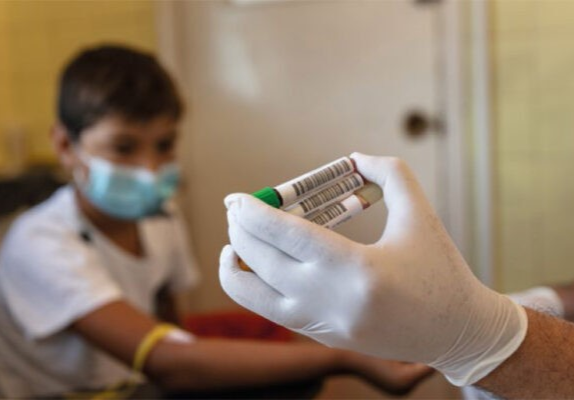

According to data from the 2022-2024 National Health and Nutrition Survey (ENSANUT), 46.6% and 35.6% of children in the states of Puebla and Tlaxcala, respectively, have lead poisoning.
These figures are higher than the national average of 15.8%, which equates to approximately 1.2 million children across Mexico. Three states account for the largest number of affected children.
Puebla has the highest rate of lead poisoning among children, followed by San Luis Potosí with 37.4%. Tlaxcala ranks third.
According to ENSANUT, these three states have the highest number of children who have tested positive for lead levels in their blood during school screenings.

The survey indicates that in Mexico, lead enters the body primarily through three routes. The most significant source is the use of unglazed earthenware, responsible for approximately 48% of cases.
This is followed by exposure at battery recycling plants and mother-to-child transmission during pregnancy, when mothers have been in contact with this metal.
Although leaded gasoline was banned in 1997, significantly reducing its presence in the air, other sources continue to pose a risk, especially in domestic and industrial settings where safe alternatives have not been adopted.
Lead is a metal that the human body cannot easily metabolize or eliminate, so it accumulates over time. Its effects are particularly serious in childhood, a stage in which the body and brain are developing.
Among the main consequences of exposure are miscarriages, premature births, and neurodevelopmental impairments. These include reduced motor skills, language development problems, decreased IQ, and memory difficulties.
Furthermore, lead can affect reproductive capacity in males and increase the risk of cardiovascular disease later in life.
Children are especially vulnerable, not only due to their developmental process but also because of behaviors such as putting objects in their mouths, which increases the risk of ingesting contaminated particles present in dust, paints, or utensils.
Although the lead problem has been recognized for decades, the most recent data show that it remains a current threat to children’s health in Mexico.
According to an interview with Milenio, Dr. Mara Téllez-Rojo, who leads research on the topic, revealed that the problem came to light after her studies in Morelos, conducted starting in 2015.
These studies revealed that 15% of newborns in urban areas had concerning levels of lead, while in indigenous areas the percentage rose to 22%.
In November 2019, the General Health Council approved the National Immediate Action Program to Prevent Exposure to Lead; however, the plan was never implemented: the institutional response was blocked after the start of the covid-19 pandemic in 2020.

Source: urbanopuebla