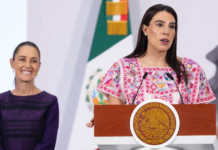
By 2026, the Puebla government will seek to double mezcal production to one million liters. This year, 110 million pesos have been allocated to planting more agaves and improving the sector’s technical capabilities, reported Ana Laura Altamirano Pérez, Secretary of Agriculture and Rural Development (Sader).
The 500,000 liters per year is a positive figure, but with 116 municipalities included in the Denomination of Origin (DO), greater production can be aspired to, as 16 mezcal cooperatives have been formed around this crop.
Furthermore, Puebla has 100 registered brands, as producers are turning to technical capabilities, aiming not only to reach the local market but also to export.
The secretary noted that, after Oaxaca, Puebla has the most municipalities where mezcal is produced, “which is a symbol of identity and pride, not only for the state, but for the country.”

She indicated that the Mixteca and Negra mountain ranges, due to their climatic conditions, favor agave growing wild, but farmers in those regions hadn’t taken advantage of it, as they were accustomed to growing corn or other grains; only a few had the vision to process it.
“The inclusion of Puebla in the Denomination of Origin for mezcal in 2015 is leading more producers to invest in reconversion to obtain better incomes by learning how to use agave to obtain a quality distillate for sale,” she added.
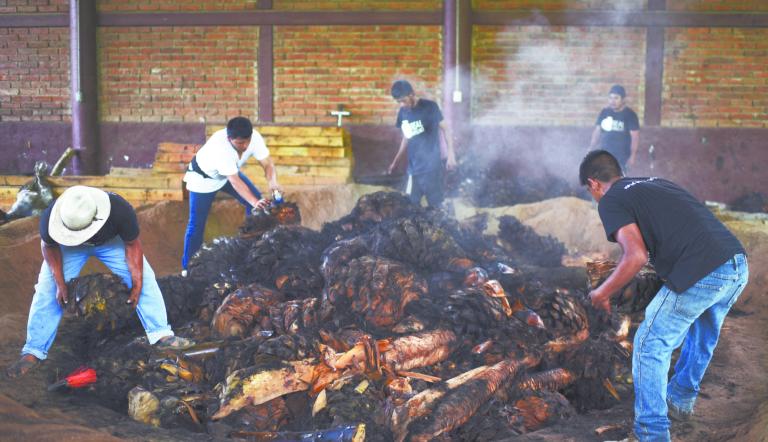
In December, Puebla will celebrate its tenth anniversary of the DO, which boasts more than 19,000 hectares of agave, as well as 250 factories or palenques (agave plantations) and at least 70 bottling plants in operation, 90% of which are owned by small-scale producers.
Programs and Support
The head of the state Sader (National Institute of Agricultural and Agricultural Development) emphasized that, through various programs and support from the state government, the goal is to double mezcal production in Puebla by 2026 and reach one million liters, which can be achieved thanks to the willingness of farmers.
She pointed out that 100 mezcal brands are registered in Puebla, and they are being strengthened so they can export to other countries, as only 35 do so because they are accredited in accordance with all the required guidelines.
Altamirano Pérez specified that the 110 million peso investment is for new plantations, nurseries, certifications, among other initiatives, as part of the drive for mezcal agave production; furthermore, this amount could be increased next year.
Producers’ willingness to invest in the conversion of their crops, without abandoning them entirely, is yielding results, and Governor Alejandro Armenta Mier intends to set a precedent during this six-year term.
Since 2020, farmers in municipalities such as Tecali de Herrera, Cuautinchán, Teopantlán, Santa Catarina Tlatempa, and Huehuetlán el Grande have found agave to be a viable alternative to the low productivity of corn. This transition has created jobs, curbed migration, and revitalized traditions linked to mezcal.
Through the Sembrando Vida program, each family receives monthly support of just over 6,000 pesos, resources they invest directly in supporting their projects: fertilizers, fertilization, and the meticulous care of their magueys and palenques.
Accompanied by engineers and social workers, producers receive ongoing training in nursery production, organic fertilizer production, pest management, and, most importantly, ancestral and modern techniques for producing the highest-quality mezcal.
The state official said that international markets are increasingly opening up to the primary sector, hence the need to support them not only with resources but also with technical training so they can cease to be solely suppliers of raw materials and become product producers by creating their own brands, in this case, mezcal.
He indicated that mezcal is valued at more than 1.1 billion pesos annually, based on the 500,000 liters produced, of which 90,000 liters are exported by eight Puebla brands to the United States, Canada, Colombia, and Japan.
In this regard, Altamirano Pérez explained that if a producer plants one hectare of corn, they obtain 3 tons, equivalent to 27,000 pesos, and if they maintain the cycle for five years, they would barely earn 100,000 pesos, less than the million pesos a farmer can earn if they invest in mezcal, which would represent profits of up to one million pesos.
He mentioned that in 2022, an unprecedented investment of 400 million pesos was made to plant 30 million agaves in 104 municipalities in the Mixteca region, in the south of the state, with the goal of reaching 500,000 liters by 2023.
She commented that investment is lower this year because there is prior work that no longer involves starting from scratch, which was difficult because it involved convincing producers to convert their crops.
The official highlighted the state government’s interest in enabling other production chains to enter markets outside of Puebla.
Source: eleconomista