
Civil Engineer and Professor; Master’s Degree in Traffic and Transportation Engineering. Researcher and specialist in infrastructure, transportation operations, and road safety education. Founding member of Enclave 8 A.C.
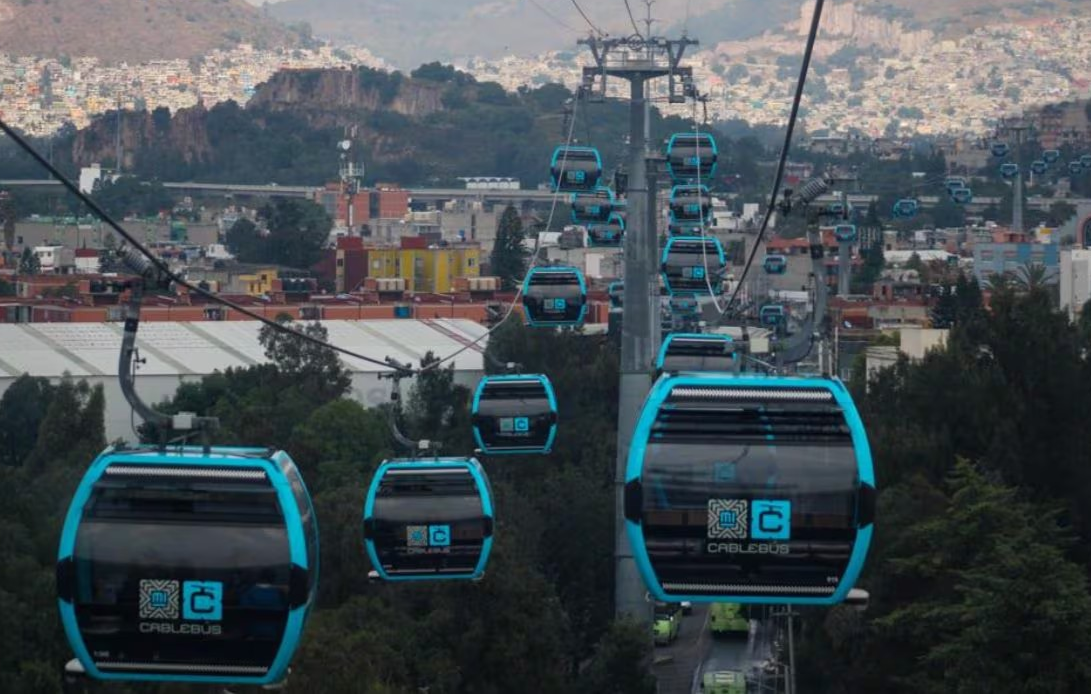
The recent announcement by the State Cabinet Coordinator regarding the route design of Puebla’s first four Cablebús lines reveals a significant methodological confusion between infrastructure availability and actual transportation demand. The figure of 43,000 people working within 500 meters of the nine proposed stations (El Sol de Puebla, 2024) is being presented as an indicator of success when, technically, it only represents the direct area of influence (buffer zone), not real travel demand.
In transportation engineering, an Intermodal Transfer Node (ITN) is a complex infrastructure designed to manage passenger flows between different modes of transport (BRT, RUTA, bicycle lanes, and pedestrian networks). Its efficiency is measured by its ability to reduce transfer friction. A simple station stop, by contrast, is only a basic boarding and alighting facility.
The criticism is that the State Government appears to be treating Cablebús stations as simple stops, ignoring the fact that a cable transportation system is only viable when integrated as a feeder to an existing trunk network rather than operating as an isolated system.

Claiming that 43,000 workers will use the system simply because of proximity ignores the Transportation Gravity Model. For the project to have technical validity, a comprehensive Origin-Destination Study is essential. Such a study would determine:
- Travel desire: Where are those 43,000 workers actually traveling? If their destinations do not align with the cable route, the system will be underutilized.
- Demand elasticity: Users choose the transportation mode that minimizes total travel time, including access, waiting, and transfers. With an average commercial speed of 18–22 km/h, Cablebús may struggle to compete with direct surface routes if the feeder network is inefficient.
A systemic problem within the Secretariat of Mobility and Transportation (SMT) is the lack of technical capacity. Urban mobility is a multidisciplinary field requiring expertise in stochastic modeling, transportation economics, and urban planning. Appointing political figures or educators to lead these agencies often replaces technical criteria with the electoral appeal of highly visible infrastructure projects.
As Molinero (2005) points out, improvisation in public transportation planning often results in deficit-ridden systems that become fiscal burdens without solving congestion problems.
The Governor’s mention of a proposed metro system also reflects a misunderstanding of transportation mode hierarchy. Given Puebla’s density and urban structure, what is needed is a restructuring of the current concession system and an expansion of the BRT network (RUTA).
Capacity Comparison
- Cablebús: 3,000–4,000 passengers per hour per direction (pphpd).
- Puebla’s main corridors: Require capacities exceeding 15,000 pphpd, achievable only through medium- or high-capacity surface systems or grade-separated infrastructure.
Cablebús is an appropriate solution for areas with difficult topography, such as the peripheral hillsides of Mexico City, Medellín, or La Paz. It is not the optimal solution for a relatively flat valley city whose road network primarily requires operational improvements to public transportation.
Technical Comparison: Cablebús vs. RUTA (BRT)
A rigorous comparison between cable transportation systems and Bus Rapid Transit (BRT) requires evaluating capacity, infrastructure costs, commercial speed, and geographic suitability.
Capacity
The main difference lies in the saturation threshold. Puebla is a valley city with dense radial travel flows.
- Cablebús: A low-to-medium capacity system. If demand exceeds 5,000 passengers per hour per direction, bottlenecks and excessive waiting times may occur.
- RUTA (BRT): By using articulated or bi-articulated buses, it offers significantly greater scalability. For Puebla’s main transportation corridors, BRT is technically better suited to absorb large volumes of workers and students.
Cost per Passenger Transported
In flat terrain, cable systems generally have a higher cost per passenger.
- Investment: Cablebús requires substantial upfront investment in imported electromechanical technology, including motors, cables, and cabins.
- Maintenance: Preventive and corrective maintenance costs for cable systems are considerably higher per kilometer than those of dedicated BRT lanes.
In a context of limited public resources, BRT can provide greater network coverage and more kilometers of service per peso invested.
Geographic Suitability
Transportation literature (ITDP, 2020) indicates that cable systems are most effective in steep or geographically challenging areas where buses would face significant operational difficulties.
In Puebla, where slopes are generally moderate or nonexistent across much of the metropolitan area, the advantage of bypassing traffic overhead does not compensate for the lower passenger capacity compared with a well-managed and dedicated surface transit system.
Integration
- RUTA: Allows physical and fare integration with feeder services using the same technology.
- Cablebús: Requires a mandatory technological transfer. If users must leave the cable system and board a bus to reach their final destination, total door-to-door travel times may increase rather than decrease.
Conclusion
From a strategic urban planning perspective, Cablebús in Puebla appears more suitable as a social mobility solution for marginalized peripheral areas with difficult topography than as a mass-transit solution for the city’s central corridors.
For high-demand metropolitan routes, expanding the RUTA BRT system offers:
- Better cost-benefit performance.
- Greater passenger capacity.
- More natural integration with the existing urban fabric.
In short, for Puebla’s primary transportation corridors, strengthening and expanding the BRT network represents a more technically sound and efficient solution than investing in a large-scale cable transportation system.
Source: e-consulta