


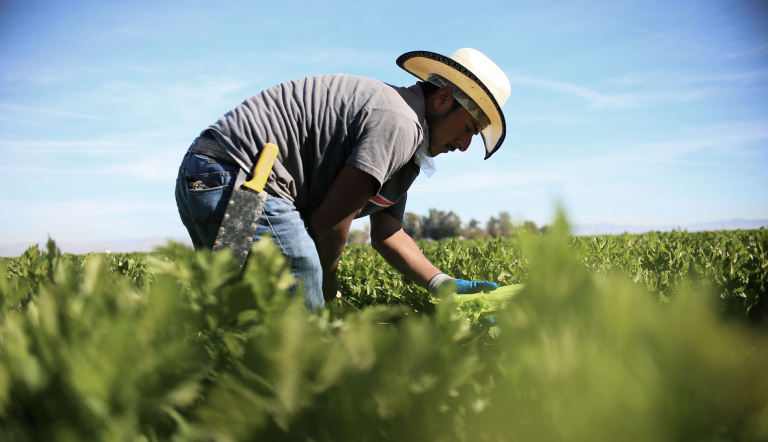
In Puebla, 600,000 hectares are available for cultivation, but they are not being utilized due to a lack of projects leading to productive reconversion, according to the State Agricultural Council (Ceagro).
Carlos Enrique Martínez y Rivera, president of the organization, said in an interview with El Economista that Governor Alejandro Armenta Mier has good intentions to make the countryside productive, but not the Secretariat of Agriculture and Rural Development (Sader), with which he has no working relationship.
He indicated that the state is missing opportunities to become a supplier of products to local agroindustries, which are forced to purchase from other states.
As an example, he cited the need for 50,000 tons of jalapeño peppers by the San Marcos and La Morena packing plants, located in the San José Chiapa region, specifically in the municipalities of Nopalucan and Rafael Lara Grajales.

In this context, he said that not a single hectare of jalapeño is produced in Puebla, which is worrisome because the conditions, and especially the land, exist to do so.
He said that agribusinesses in Puebla are willing to work under contract farming to ensure an income for producers, but that this is not the view of the agricultural authorities in Puebla.
He also commented that there is a poor territorial division, which favors production by furrow rather than by hectare, a situation that does not help generate higher yields to supply markets.
Likewise, the Ceagro leader considered it extremely important to promote the construction of greenhouses to obtain better-quality crops, as is happening in Jalisco and Nuevo León, states that are leaders in the agricultural sector.
He noted that two six-year terms ago, the construction of greenhouses was promoted, but it failed because poor-quality materials were used due to corruption by those who managed them.
Martínez y Rivera said that Ceagro wants to collaborate with the authorities, but it requires staff at Sader who understand the needs and see opportunities for growth.
He mentioned that the state can increase its exports, “but unfortunately, local authorities continue to maintain the same thinking they had 50 years ago, that is, viewing the countryside as something insignificant and solely for personal consumption.”
He said that ensuring food security in the current way without exploiting the available hectares in Puebla will not lift the countryside and its people out of the backwardness.
Source: eleconomista


